Dimensions:
inches
Materials:
led lightbulb, plastic packaging, stainless steel wire, electrical wire, hardware
Electrical:
110 – 120V
Light Color:
2700K
Availability:
Experiments in Tracing the Boundaries of a Bulb III
00034
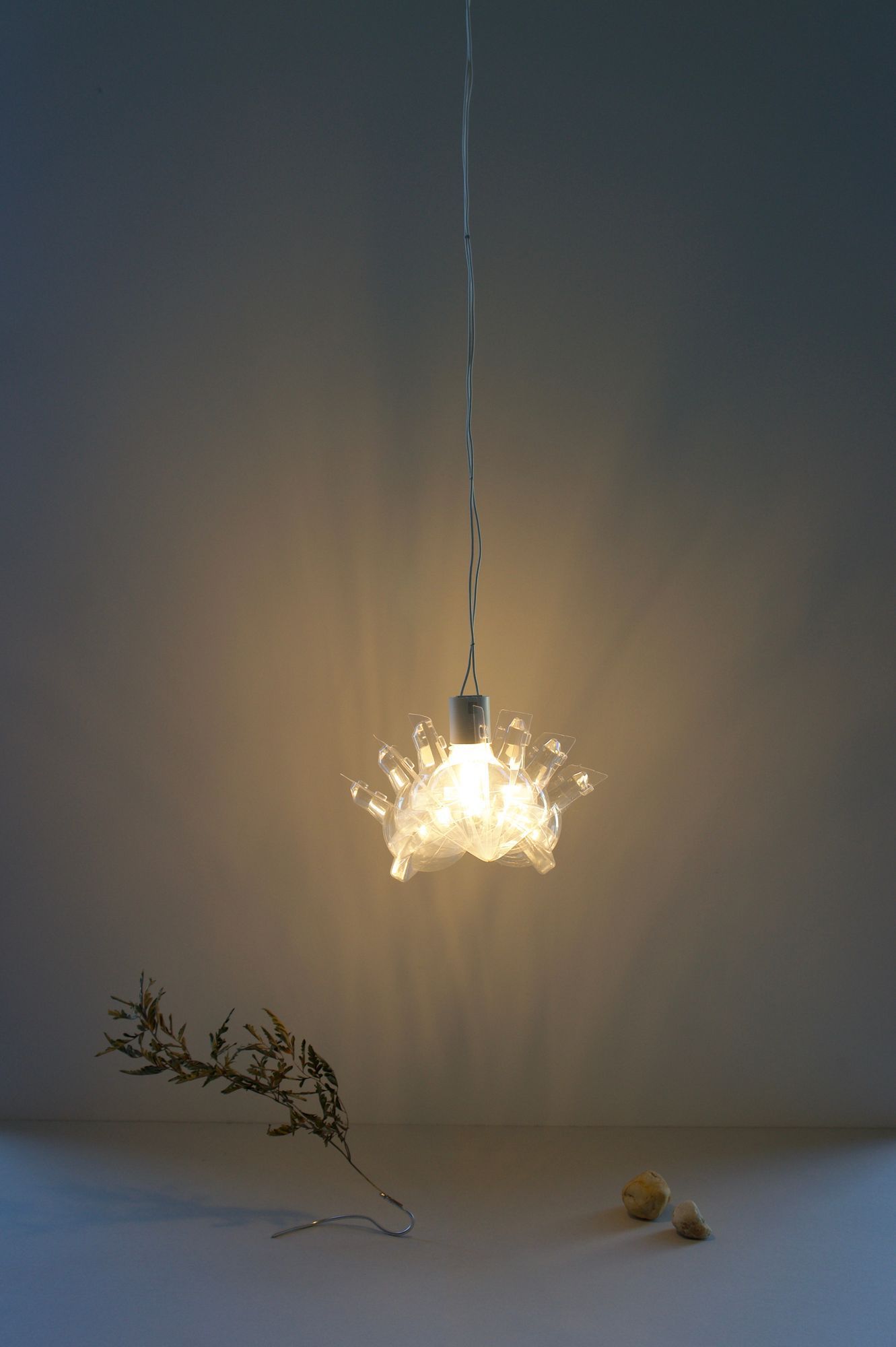
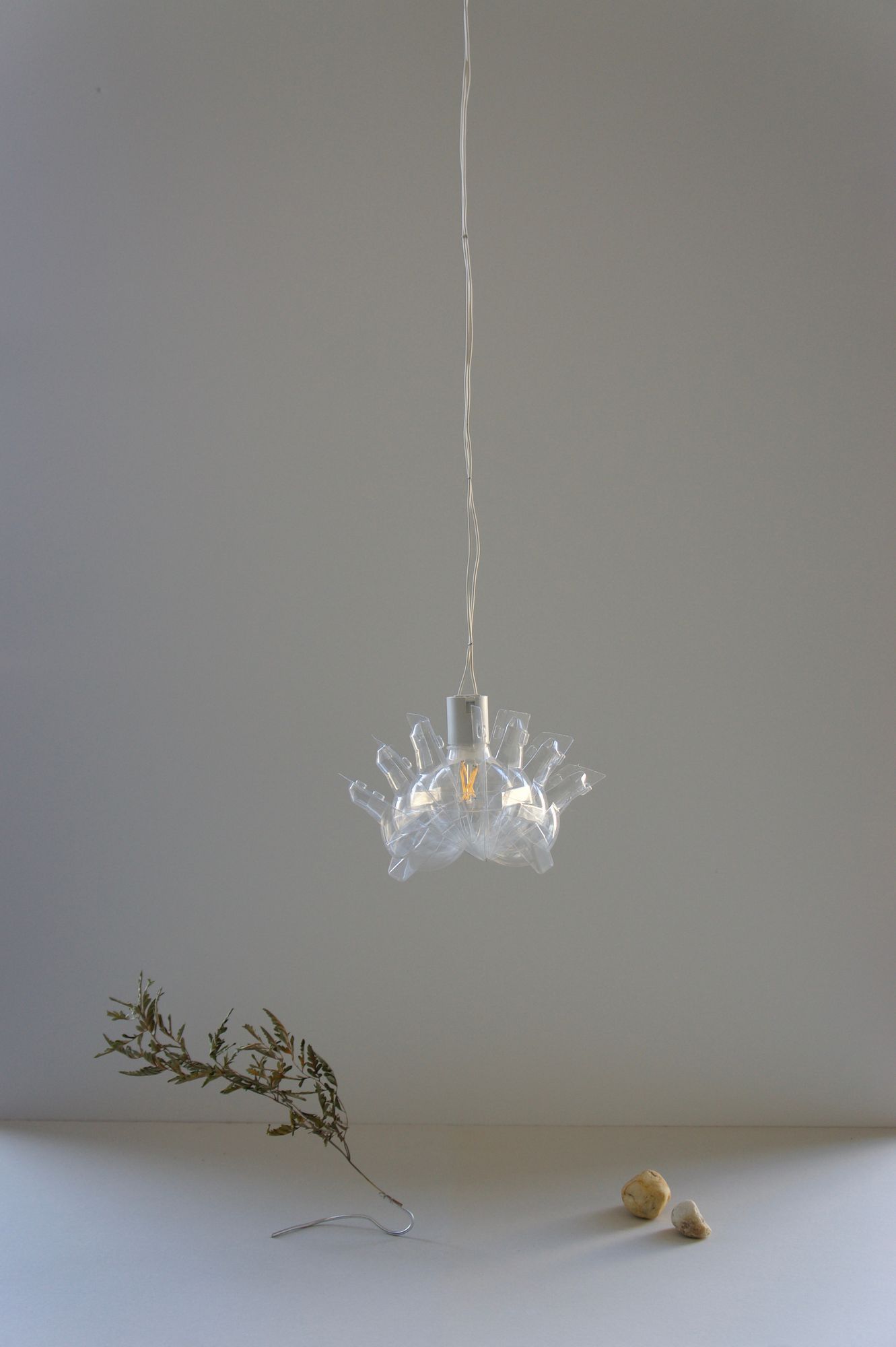
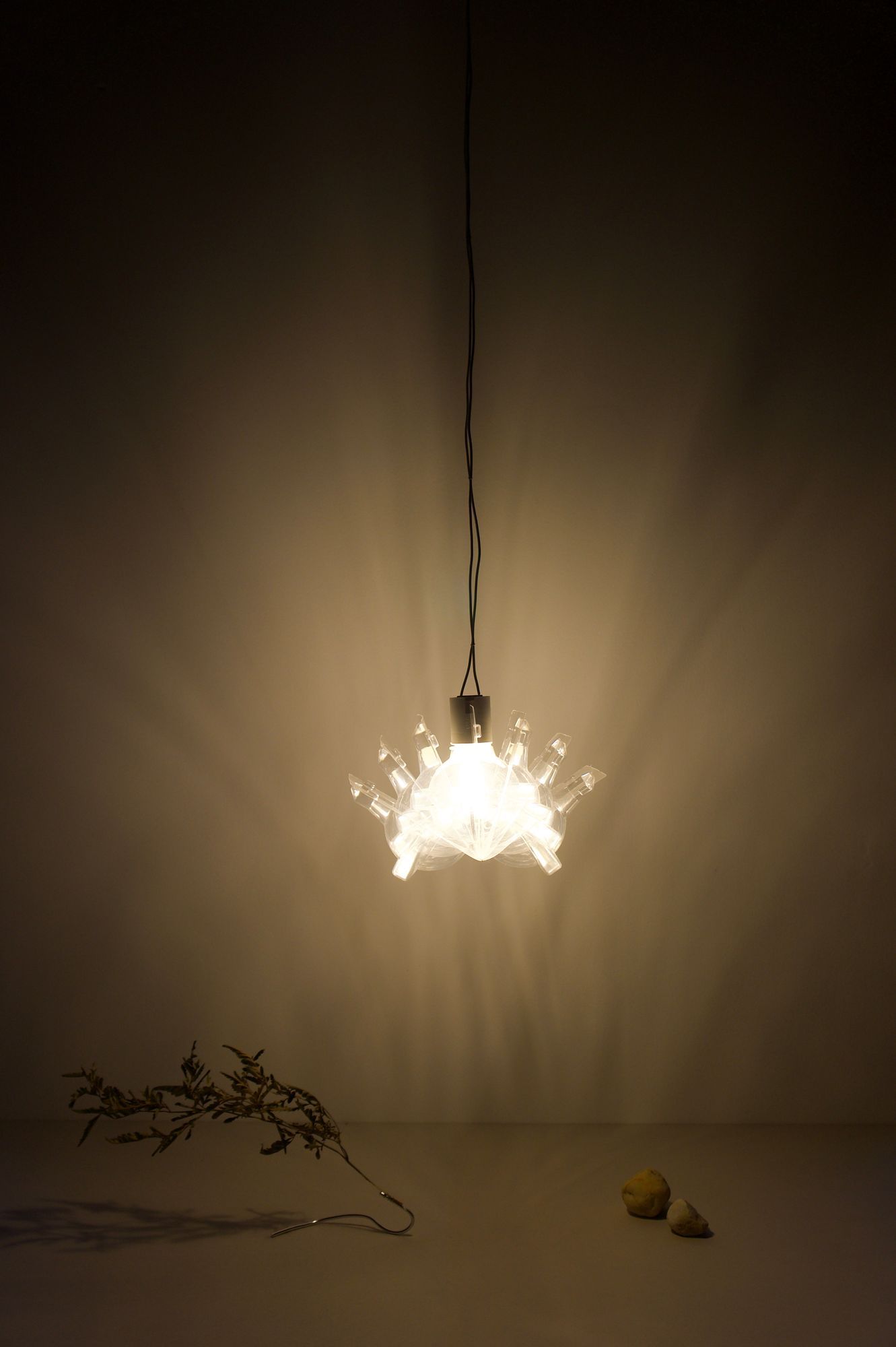
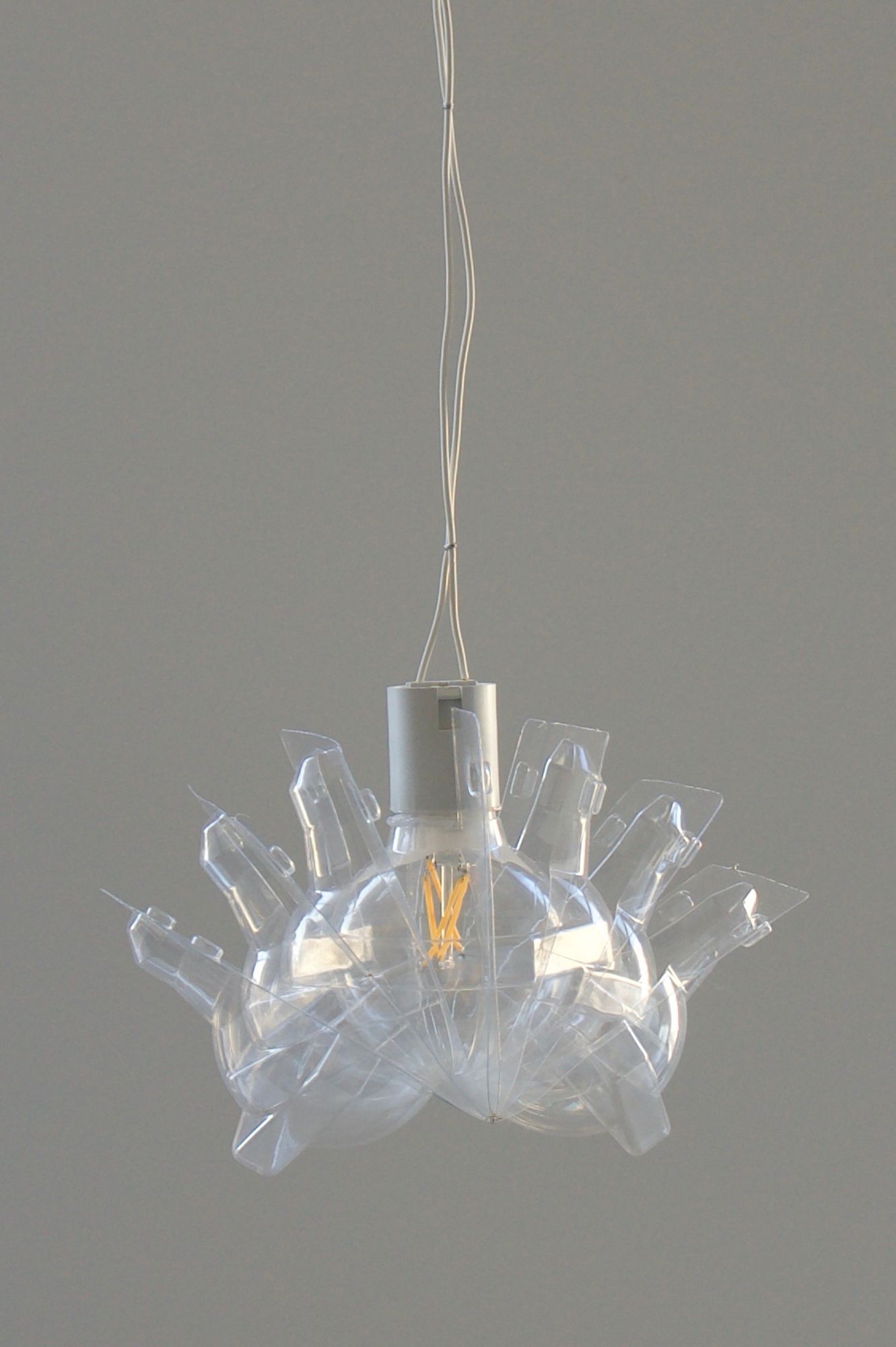
A broken LED lightbulb is re-encased in the plastic packaging it was purchased in along with the packaging for three other bulbs.
When the bulb was accidentally dropped on the floor, it exposed the inner LED light filament that the glass was protecting, and by extension, this exposed the superficial nature of the glass in the design of an LED bulb. It provides no functional purpose, it does not contain inert gas like an incandescent bulb does, it is merely a costume to convince us that it is a lightbulb. This grants us a glimpse into the transitional period in the design, manufacturing, and consumption of lightbulbs we find ourselves currently within: the final design of incandescent bulbs and the dawn of LED bulb design. But it’s a newer technology dressed up as the older one; to convince us, to console us, that it’s okay to spend our money on them.
The broken and missing protective glass bulb is replaced by its original plastic packaging, re-affixed to the remaining shard and socket. It becomes a ceremonial ‘bulb’ replacing the missing glass. The void within the plastic case traces the outline of the bulb, showing us where the useless glass once was. A single package, while more conceptually poignant perhaps, lacks visual interest. Three more plastic packages were added to the central one, repeating and extending in myriad this fake shell of a bulb. The edges of the bulb become blurred through the repetition, each plastic shell catches the light as it emanates through. The superficiality reverberates.
Dimensions:
inches
Materials:
led lightbulb, plastic packaging, stainless steel wire, electrical wire, hardware
Electrical:
110 – 120V
Light Color:
2700K
Availability: